Focus is the new IQ
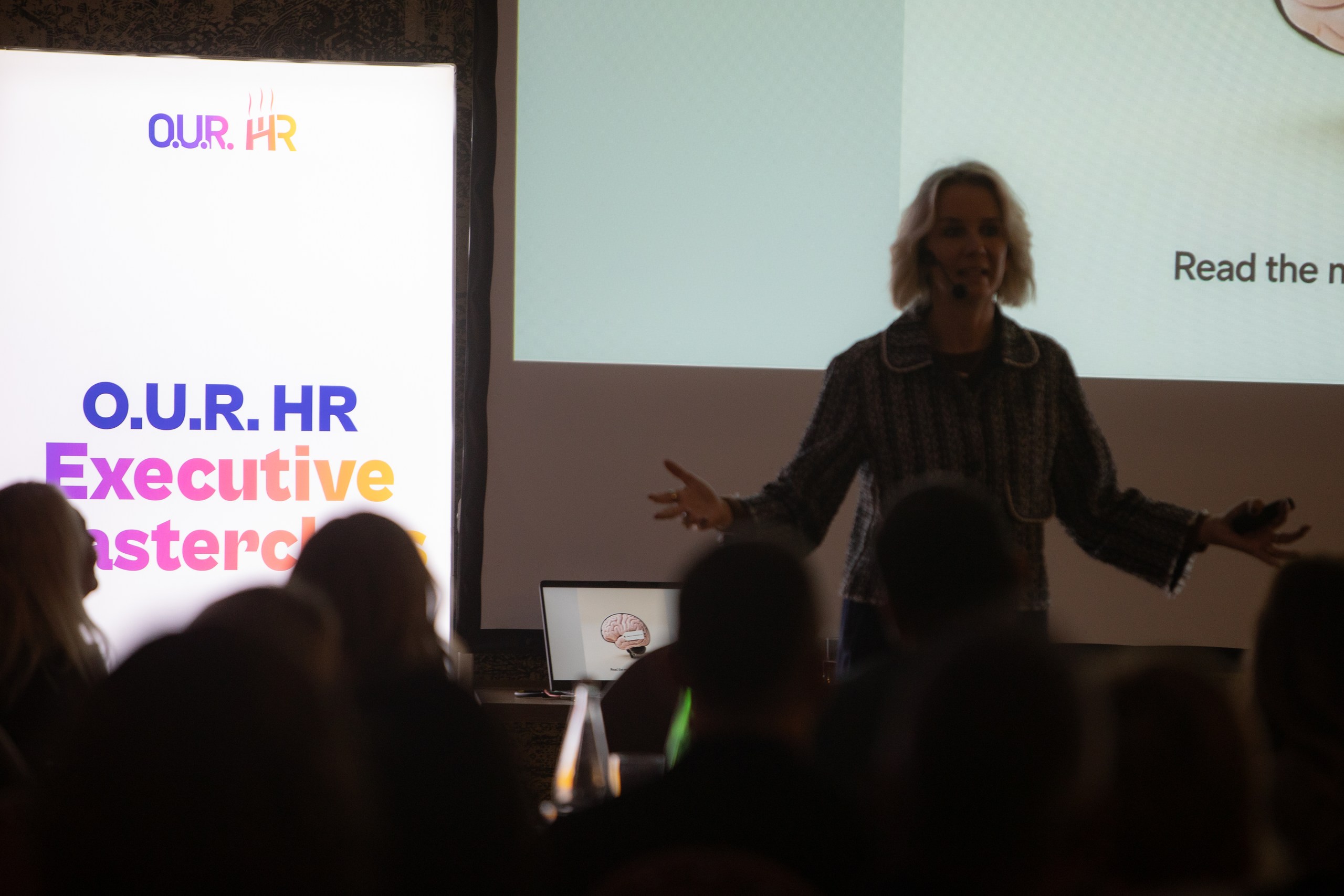
Companies ask employees to focus, yet take that focus away every day. That is why focus is the new gold — the main message from Professor Elke Geraerts, a neuroscientist, at the regional O.U.R. HR Executive Masterclass held last week in Belgrade.
Just 47 seconds. According to research cited by Dr Elke Geraerts, that is how long we now spend on one screen, on average, before shifting our attention elsewhere. In a business world that expects ever greater productivity, creativity and strategic thinking, the ability to concentrate is becoming one of our most valuable — and most endangered — resources. In an era of artificial intelligence, constant interruptions and permanent availability, protecting our focus is essential.
But is the loss of focus really an individual problem, or a problem for organizations that have turned constant availability into a measure of commitment?
That was one of the central questions at the fourth O.U.R. HR Executive Masterclass, held on October 29 in Belgrade and organized by the O.U.R. HR Association. This annual event brought together HR directors and leaders from across the region. This year's guest was internationally recognized psychologist and expert in mental resilience and focus, Dr Elke Geraerts, founder of Better Minds and author of the bestseller “Focus is the New Gold”.
The problem is not just a lack of time, but a loss of attention
In a world where success is often measured by completed tasks, meetings held and speed of replying to messages, it is increasingly difficult to distinguish real productivity from constant busyness. During her talk and interactive workshop, Dr Geraerts explained the science of attention and practical ways to protect it, highlighting a paradox of modern work: technology enables us to be more efficient than ever, yet creates an environment where it is increasingly hard to find room for deep thinking.
She paid particular attention to deliberate disconnection: the ability to alternate periods of intense focus with mental recovery. Moments when the brain is not exposed to constant demands and stimulation create space for creativity, connecting ideas and better decision-making.
The message is clear: teaching employees to focus better is not enough if the organizational culture constantly interrupts them.
Focus is no longer just a personal skill. It is an organizational responsibility.
One of the Masterclass's key themes was the role of leaders and HR in creating a working environment that supports concentration, sound decision-making and sustainable productivity.
“We cannot expect people to innovate, be creative and think strategically while taking away their space to think every day. For years, we have taught employees to manage their time better. Perhaps it is time to teach organizations to manage the demands they place on people better. Focus is not just an individual responsibility. It is also a matter of organizational culture, and HR has an important role in shaping it,” says the Belgian professor, who spent years working as a research associate at Harvard University.
Artificial intelligence can give us back time, but not necessarily focus
The rapid development of artificial intelligence adds a new dimension to this topic. As companies invest more in AI tools, automation and process optimization, the question is what happens to the time technology frees up. If we simply fill those hours with more meetings, messages and tasks, technological progress will not necessarily lead to better work. On the contrary, in a world where machines process information faster and faster, our ability to think critically, be creative, show empathy and make complex decisions becomes even more important. All those abilities require attention. Focus is therefore becoming less a matter of individual productivity and more a strategic question about the future of work.
The fourth O.U.R. HR Executive Masterclass also explored how HR leaders can protect their own focus while navigating business expectations, organizational changes and employee needs. Through sharing experiences and practical exercises, participants had an opportunity to reconsider their own habits and the organizational patterns that affect the quality of their teams' work.
The O.U.R. HR Executive Masterclass is held once a year to give HR leaders from across the region an opportunity to exchange experiences, access up-to-date knowledge and reflect strategically on the issues shaping the future of work.
This year's gathering offered an important conclusion: perhaps the greatest challenge of modern leadership is no longer how to get more out of people, but how to help them direct their attention towards what truly creates value.